
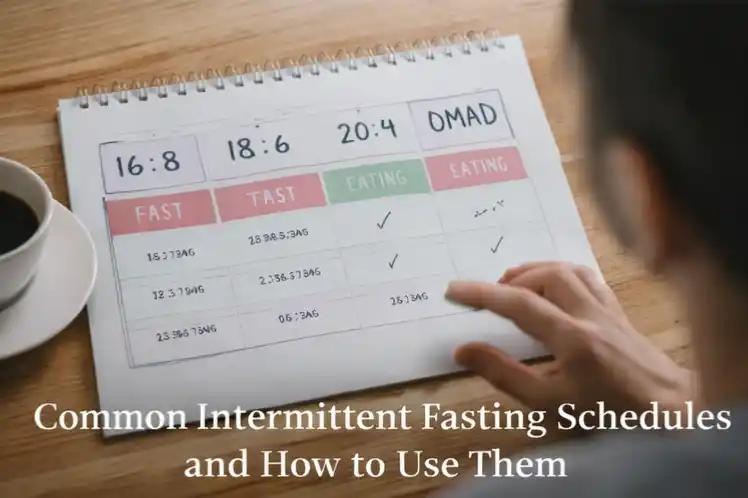
Intermittent Fasting has become part of everyday health conversations, not as a trend built on extremes, but as a timing framework many people quietly experiment with. Instead of focusing on what to eat, it shifts attention to when eating happens, which can subtly influence energy, appetite awareness, and daily rhythm.
What makes Intermittent Fasting appealing is its flexibility. There isn’t one rigid method, and there’s rarely a sense that you must overhaul your entire lifestyle overnight. Over time, with consistency, many people find that timing awareness alone changes how they relate to meals.
This article explores common Intermittent Fasting schedules, how they are typically approached, and what to keep in mind as you test patterns gently. This is informational only, not medical advice, and is meant to help you understand the landscape rather than promise outcomes.
For a foundational overview often referenced in nutrition discussions, Healthline’s intermittent fasting guide provides useful background context without framing it as a one-size solution.
Why eating schedules matter more than they seem
Meal timing interacts with digestion load, satiety signaling, and daily energy stability. Even without changing food quality, shifting when meals occur can change how the body experiences hunger and fullness across the day.
Intermittent Fasting is often discussed alongside metabolic flexibility, a concept describing how smoothly the body adapts between fed and fasted states. This idea is commonly observed in long-term dietary pattern research, even when results vary widely between individuals.
The role of rhythm in Intermittent Fasting
At its core, Intermittent Fasting introduces rhythm. Eating windows create predictable pauses, which can support awareness rather than restriction. Over time, people often notice that hunger cues feel more patterned instead of random.
This rhythm-based framing helps explain why Intermittent Fasting schedules are often described as lifestyles rather than short-term plans.
The 16:8 schedule and why it’s widely used
The 16:8 approach involves fasting for sixteen hours and eating within an eight-hour window. It’s commonly chosen because it often fits existing routines, especially for those who already skip late-night eating.
In practice, many people align their eating window with daytime hours, allowing digestion to taper off before sleep. This timing can subtly reduce digestion load overnight.
Using 16:8 without overthinking it
Rather than watching the clock obsessively, most people ease into 16:8 by delaying the first meal slightly or finishing dinner earlier. With consistency, the pattern becomes familiar rather than forced.
If you’re new to this approach, guides like 16:8 intermittent fasting for beginners often focus on adaptation rather than strict enforcement.
The 14:10 schedule as a softer entry point
Intermittent Fasting doesn’t have to start aggressively. A 14:10 schedule shortens the eating window modestly and is often used as a transition phase.
This option is frequently discussed among people who want to observe appetite patterns without triggering stress around food timing.
Who often prefers 14:10
Those with early mornings or social evening meals sometimes find 14:10 more sustainable. It preserves flexibility while still introducing temporal awareness.
The 18:6 schedule and extended fasting windows
An 18:6 schedule narrows the eating window further. While still considered a daily Intermittent Fasting pattern, it requires more intentional planning.
Over time, some people notice steadier energy once the body adapts, a commonly observed pattern discussed in nutrition research circles.
Managing energy stability during 18:6
Spacing meals thoughtfully within the window can reduce abrupt hunger. Nutrient timing becomes more noticeable here, even without tracking macros.
Alternate-day fasting explained simply
Alternate-day fasting alternates between eating days and significantly reduced intake days. This approach is less about daily rhythm and more about contrast.
It’s often discussed academically, but in real life, fewer people maintain it long-term compared to daily Intermittent Fasting schedules.
The 5:2 approach and weekly structure
The 5:2 method involves eating normally most days and reducing intake on two non-consecutive days. It introduces flexibility while still creating fasting exposure.
This schedule can feel less intrusive socially, which matters for long-term adherence.
How weekly fasting differs psychologically
Instead of daily restraint, the focus shifts to specific days. Many people notice that this reduces decision fatigue around daily timing.
OMAD and its narrow eating window
OMAD, or one meal a day, is an extreme form of Intermittent Fasting. While often discussed online, it’s typically approached cautiously.
This pattern significantly compresses nutrient timing and digestion load into a single sitting.
Why OMAD isn’t for everyone
Energy stability and satiety signaling can feel unpredictable at first. Over time, only a small subset of people find it sustainable without discomfort.
Choosing a schedule based on daily life
Rather than asking which Intermittent Fasting schedule is “best,” it’s more practical to ask which fits your existing rhythm. Work hours, sleep patterns, and stress levels all matter.
Many people notice better consistency when the schedule adapts to life, not the other way around.
Experience hint: patterns people often notice mid-journey
After several weeks of consistent timing, many people notice hunger arriving at more predictable times. This doesn’t mean hunger disappears, but it often feels clearer rather than urgent.
This observation is informational only, not medical advice, and reflects commonly shared experiences rather than guaranteed outcomes.
How Intermittent Fasting interacts with digestion
Spacing meals allows digestion cycles to complete more fully. Some people find that reduced evening intake feels lighter overnight.
This is often discussed alongside digestion load, a concept describing how frequently the gut processes incoming food.
Energy changes over time, not overnight
Intermittent Fasting rarely produces immediate shifts. Gradually, with consistency, energy patterns may feel steadier during fasting hours.
Many people notice this over time rather than within days, reinforcing the importance of patience.
Experience hint near the later stages
Closer to long-term consistency, people often report that meal timing feels automatic rather than effortful. The clock fades into the background.
This shift is subtle and varies widely, but it’s a pattern commonly observed in long-term discussions.
Common mistakes when starting Intermittent Fasting
Over-restriction, rigid clocks, and ignoring sleep are frequent pitfalls. Intermittent Fasting works best when treated as a framework, not a rulebook.
Why flexibility supports sustainability
Schedules that allow occasional adjustments tend to last longer. This supports both mental ease and social balance.
Combining schedules with daily routines
Aligning Intermittent Fasting with workdays and relaxing timing on weekends is a common strategy. This preserves rhythm without burnout.
Resources like intermittent fasting schedule basics for beginners often emphasize adaptability rather than perfection.
Short answers people often look for
Intermittent Fasting is about timing, not deprivation. Most schedules work by creating consistent eating windows that the body gradually adapts to.
Choosing a method depends less on discipline and more on lifestyle compatibility.
Another quick clarity point
Not every day needs to look identical. Many people use Intermittent Fasting as a baseline and adjust during travel, stress, or social events.
This flexibility is part of why it remains popular across different lifestyles.
Frequently asked questions
Is Intermittent Fasting safe for everyone?
It varies. Many people use it comfortably, but individual conditions matter. This content is informational only, not medical advice.
How long before a schedule feels normal?
Adaptation is gradual. Some notice rhythm changes within weeks, while others take longer.
Can schedules change over time?
Yes. Many people adjust Intermittent Fasting schedules as routines, work hours, or stress levels shift.
Do I need to track everything?
Most people find awareness more helpful than tracking. Simplicity supports consistency.
Closing thoughts on sustainable timing
Intermittent Fasting works best when approached as a long-term rhythm rather than a short challenge. Its strength lies in flexibility, awareness, and gradual adjustment.
When timing aligns with real life, it often feels calmer and more intuitive, which may be why it continues to attract steady interest.
If you want more evidence-based guides, explore related articles on this site.
If you want more evidence-based guides, explore related articles on this site.