
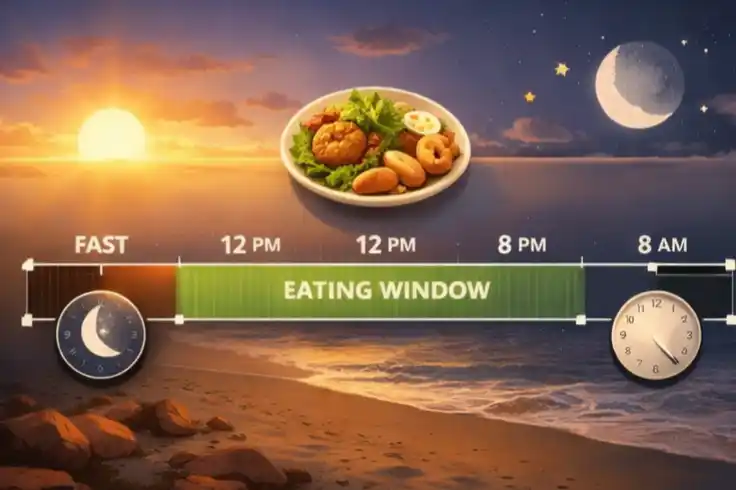
Busy workdays don’t fail you—you get pulled in too many directions. Meetings spill over. Commutes run late. Lunch becomes “whatever is closest.” And suddenly, even the best intermittent-fasting plan feels impossible to follow.
The good news is that an intermittent-fasting schedule doesn’t need to look perfect to work well. Over time, consistency matters more than intensity. The goal is a rhythm that supports energy stability, keeps your digestion load manageable, and still fits around real life.
If you want a deeper primer on the basics, this intermittent fasting guide is a solid starting point. From there, it’s about adapting the idea to your calendar, not fighting your calendar.
And just to keep this grounded: this is informational only, not medical advice—especially if you have diabetes, a history of disordered eating, are pregnant, or take medications that affect blood sugar.
Start with the real problem: decision fatigue
Most people don’t struggle with fasting itself. They struggle with decisions. “When should I eat?” “Should I wait?” “Do I eat now or later?” On busy workdays, that mental load adds up quickly.
A practical intermittent-fasting schedule reduces choices. You pre-decide an eating window that matches your working hours, your commute, and your typical hunger pattern. That’s where metabolic flexibility becomes helpful—not as a trendy phrase, but as a quiet, steady ability to handle time between meals without feeling panicky.
Many people notice that once the schedule feels predictable, satiety signaling becomes easier to read. You’re not constantly negotiating with your appetite. You’re simply following a structure you already agreed on.
A workday schedule that feels “invisible” (and why it helps)
If your workday starts early, an “invisible” fasting window often means skipping a rushed breakfast and eating later with intention. If your workday starts later, it might mean a normal breakfast and an earlier finish. The best schedule is the one that doesn’t require frequent explanation or constant adjustments.
Here’s a simple way to think about it: anchor your eating window to the hours where you can actually eat calmly. Not the hours you wish you had, but the hours that realistically exist.
One commonly observed pattern is that people do better when their first meal isn’t eaten in a hurry. When you can sit, breathe, and eat slowly, nutrient timing naturally becomes more supportive—your body processes the meal with less stress and fewer “I need a snack immediately” moments afterward.
Option A: Midday-to-evening window for traditional work hours
This tends to work well if mornings are chaotic and afternoons are more stable. You delay your first meal until late morning or lunchtime, then finish dinner earlier in the evening. It also fits social meals better than most people expect.
Over time, this approach can feel lighter on the stomach because the digestion load is concentrated into fewer, calmer meals instead of scattered bites all day. A steady structure often reduces the urge to graze, especially when work stress is high.
Option B: Early window for people who crash at night
If your evenings are where you struggle—late cravings, fatigue-snacking, or “I’ll just eat something while answering emails”—an earlier eating window may feel surprisingly freeing. You eat earlier, and you stop earlier, which creates a clean mental boundary for the night.
Micro experience hint: many people notice that when they finish eating earlier, their sleep routine becomes smoother. Not dramatic, not instant—just a gentle shift where late-night digestion doesn’t compete with winding down.
Keep the fasting part simple (what you do matters more)
During the fasting window, most schedules work best with hydration and a calm baseline. Water is obvious, but don’t underestimate electrolytes from food later and steady salt intake if your diet is lower-carb. Caffeine can fit too, but how you tolerate it matters.
For some people, coffee on an empty stomach feels fine. For others, it feels like anxiety disguised as energy. Pay attention to that feedback. It’s not a character flaw—it’s just your nervous system giving data.
If you’re new and want an easy structure, you can follow a gentle beginner approach like the one in this intermittent fasting schedule for beginners. The best early win is not pushing harder—it’s building a routine that feels steady.
What to eat so you don’t feel “fine… then suddenly starving”
A busy schedule punishes meals that are too light. When your first meal is mostly carbs without enough protein or fat, hunger often returns fast—right when you’re least able to handle it.
A more stable meal usually has three parts: a protein base, fiber-rich plants, and a satisfying fat source. This supports satiety signaling and helps energy stability stay smoother through the afternoon.
Also, try not to “make up” for fasting with a chaotic meal. A calm meal eaten slowly often lands better than a perfect meal eaten in five minutes while standing. That’s not nutrition theory—it’s simply how humans eat on real workdays.
Here’s a short answer that tends to help most busy people: choose a schedule that protects one solid meal you can eat without rushing, then build the rest around it. When your meals feel grounded, the fasting hours feel easier. When meals feel messy, fasting becomes a stressor instead of a tool.
When your day blows up, use the “minimum effective plan”
Some days are just not compatible with strict rules. Travel. Deadlines. Unexpected meetings. On those days, the healthiest move is to protect stability, not chase perfection.
Instead of thinking “I ruined it,” shift to “What’s the smallest version I can still do?” That may mean keeping your usual first meal time, but choosing a simpler dinner. Or eating a little earlier without turning it into an all-day snack cycle.
Micro experience hint: many people notice that once they stop treating schedule changes as failure, the whole approach becomes more sustainable. Consistency becomes something you return to, not something you either “have” or “lose.”
Frequently Asked Questions
What’s the best intermittent-fasting schedule for a 9-to-5 job?
A schedule that starts your eating window around late morning or lunch and ends in the early evening is often easiest to maintain. It fits work breaks and reduces late-night eating, while still leaving room for a normal dinner.
Can I do intermittent fasting if my mornings are stressful?
Yes, and it can actually simplify mornings by removing one decision. The key is keeping hydration steady and planning a balanced first meal so you don’t feel drained or overly hungry once work pressure builds.
What if I can’t keep the same schedule every day?
That’s normal with real life. Try to keep a familiar “default” schedule, then adjust gently when needed. Over time, small shifts are usually easier to recover from than frequent all-or-nothing changes.
Will intermittent fasting hurt my energy at work?
It shouldn’t feel like constant struggle. If energy drops sharply, review your first meal quality, hydration, sleep, and stress load. A better-fitting eating window often restores steady focus without forcing extra willpower.
A calm way to make this work long-term
Intermittent fasting can be a practical structure, not a rigid identity. When it matches your workday reality, it becomes quieter in the background—just a rhythm you live inside. Gradually, that rhythm supports steadier appetite cues and fewer “food decisions” during the day.
The most reliable results tend to come from small repeats: a predictable first meal, fewer last-minute snacks, and a schedule that bends without breaking. If you keep it simple, your routine becomes easier to trust.
If you’d love more calm, science-first insights, feel free to look around this site.
You can also check additional evidence-based breakdowns on this site.