
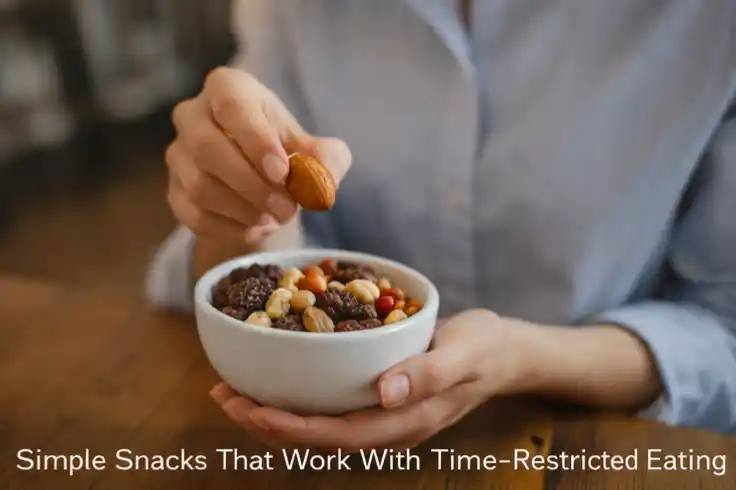
Time-restricted eating sounds straightforward—eat within a window, fast outside it. In real life, the friction shows up between meals. That’s where simple snacks can quietly make or break consistency, especially when you’re aiming for steady energy without overthinking food.
This guide focuses on snacks that fit naturally into time-restricted eating. Not hacks. Not extremes. Just practical choices that tend to feel lighter on digestion load while supporting satiety signaling and energy stability over time. Everything here is informational only, not medical advice.
People often ask whether snacking “ruins” Intermittent Fasting. The short answer is that context matters. The longer answer is that snacks can either support metabolic flexibility—or quietly work against it—depending on timing, composition, and how they land in your day.
Why snacks still matter inside a time window
Even within a defined eating window, appetite isn’t linear. Hunger can show up early, late, or right in the middle. Snacks exist to bridge those moments without turning into mini-meals that spike digestion load.
In Intermittent Fasting routines, snacks work best when they reinforce the rhythm you’re already building. That usually means stable energy, calm digestion, and less mental chatter around food.
Satiety is not just about calories
Satiety signaling responds to texture, protein presence, and micronutrients—not just portion size. A small, balanced snack can feel more satisfying than a larger, carb-heavy option that digests fast and leaves you distracted.
Timing snacks without breaking the flow
Timing matters more than most people expect. Snacks placed too close to the end of a window can blur natural hunger cues, while snacks too early may feel unnecessary.
Over time, many people notice that snacks work best when they land at a predictable point—often mid-window—supporting nutrient timing without crowding meals.
Mid-window tends to feel easiest
Commonly observed patterns suggest that a mid-window snack supports energy stability without disrupting appetite for the next meal. It’s less about rules and more about noticing how your body responds.
What makes a snack “work” here
Snacks that fit time-restricted eating usually share a few traits: simple ingredients, moderate protein, gentle fats, and low digestive friction.
In Intermittent Fasting, these traits help reduce the mental load of food decisions, which is often just as important as the nutrition itself.
Protein anchors the snack
Protein adds structure. It slows digestion just enough to support satiety signaling without heaviness. Think eggs, yogurt alternatives, or simple lean proteins paired with plants.
Fats smooth the energy curve
Fats help extend fullness and reduce energy dips. The key is moderation—enough to support energy stability, not so much that digestion feels sluggish.
Simple snack ideas that stay flexible
You don’t need novelty. You need repeatable options that feel good on busy days and quiet days alike.
Whole-food combinations
Apple slices with nut butter, cottage cheese with berries, or hummus with raw vegetables often land well. These combinations balance fiber, protein, and fats without feeling heavy.
Minimal-prep protein options
Boiled eggs, plain Greek-style yogurt, or leftover grilled chicken can function as snacks when portions stay modest. These choices tend to support metabolic flexibility over time.
Snacks and digestion load
Digestion load is rarely discussed, yet it shapes how snacks feel an hour later. Heavy, ultra-processed snacks demand more digestive effort and often disrupt energy stability.
Lighter snacks, by contrast, often leave people feeling clear-headed rather than sleepy.
Texture matters more than expected
Crunchy, fibrous foods slow eating and support satiety signaling. Soft, refined foods are easy to overconsume without noticing fullness.
Where beverages fit in
Drinks can function as snacks if chosen carefully. Smoothies, for example, can blur boundaries if they’re too dense.
Many people find that simple beverages—like unsweetened tea or coffee with a splash of milk inside the eating window—support appetite awareness during Intermittent Fasting.
Liquid calories require attention
Liquids digest quickly and can bypass fullness cues. Keeping them simple helps maintain nutrient timing without accidental overconsumption.
What research discussions often highlight
Nutrition research often discusses appetite regulation, energy stability, and metabolic flexibility in relation to eating patterns. Snacks that respect these themes tend to align better with time-restricted eating approaches.
If you want a broader medical overview of Intermittent Fasting, the Mayo Clinic offers a clear explanation in their intermittent fasting overview, which many people reference for foundational understanding.
Common mistakes with “healthy” snacks
It’s easy to overdo foods labeled as healthy. Large handfuls of nuts or energy bars can quietly crowd out hunger cues.
In Intermittent Fasting routines, simplicity often outperforms complexity.
Portion creep happens quietly
Over time, people often notice that snacks grow larger without intention. Paying attention—not restriction—usually brings portions back into balance.
Snacks that fit a 16:8 rhythm
A 16:8 pattern leaves room for one snack if needed. The goal isn’t to fill the window, but to support it.
If you’re looking for more specific examples, this guide on snacks that fit a 16:8 intermittent fasting schedule explores combinations that tend to feel balanced without overcomplicating things.
Consistency beats variety here
Rotating a small set of familiar snacks reduces decision fatigue and supports long-term adherence.
Listening without overanalyzing
Time-restricted eating works best when observation replaces obsession. Not every hunger signal needs a response, and not every snack needs optimization.
This is informational only, not medical advice, but many people find that calmer food decisions emerge naturally with consistency.
Experience hint: what people often notice
After a few weeks of consistent timing, many people notice fewer cravings between meals. Snacks start to feel optional rather than urgent, which subtly reinforces metabolic flexibility.
Energy steadiness becomes more noticeable
Rather than spikes and crashes, energy tends to level out gradually. This shift is often discussed in nutrition research without framing it as a guaranteed outcome.
When a snack might not be needed
Some days, meals alone feel sufficient. Skipping a snack isn’t failure—it’s feedback.
Intermittent Fasting adapts to real life when you allow flexibility without abandoning structure.
Experience hint near the end
With time, people often observe that their preferred snacks become simpler. What once felt exciting gives way to what feels quietly supportive and easy to digest.
FAQ
Can snacks still support Intermittent Fasting?
Yes. When eaten within the window and kept simple, snacks can support energy stability without disrupting the fasting rhythm.
Is snacking required in time-restricted eating?
No. Snacks are optional tools, not mandatory components. Some days you may not need them at all.
Do snacks affect metabolic flexibility?
They can. Snack timing and composition influence how smoothly the body shifts between fuel sources.
Simple snacks aren’t about filling space. They’re about supporting the flow you’re already building with time-restricted eating. When chosen with awareness, they tend to fade into the background—quietly doing their job.
Intermittent Fasting doesn’t demand perfection. It rewards consistency, observation, and small choices that feel sustainable over time.
If you want more evidence-based guides, explore related articles on this site.
If you want more evidence-based guides, explore related articles on this site.